 contact@livingyogaschool.com
 +91 8864911164


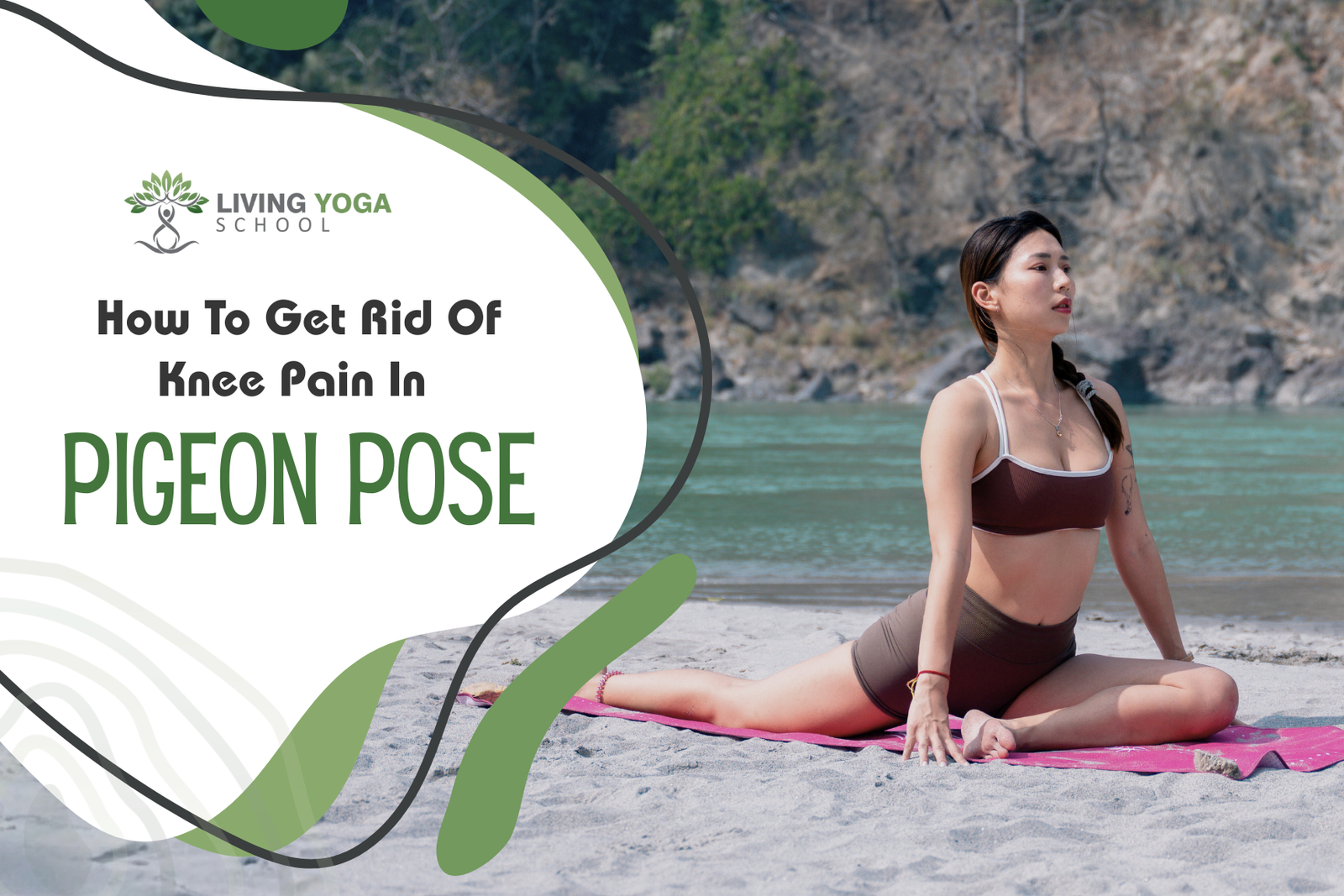
Eka pada raja kapotasana, aka. King Pigeon Pose
Pigeon: Most people either love it or hate it. I’ve found, however, that for the people who don’t like the pose, it’s not because they don’t need their hips stretched, or they want to avoid the stretch; it’s usually because the pose causes pain in the inner knee.
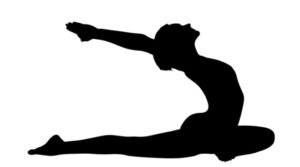
It’s this sharp, often crippling pain on the medial (inside) of the knee that keeps people from even attempting the pose. So what can we do about it?
First, we want to discover why there is pain in the inner knee.
The pose requires a lot of external rotation of the front leg and hip. This range of motion can be limited because of the shapes of one’s bones, but the tension of the inner thigh muscles can also severely limit one’s range of motion.
So as the leg attempts to externally rotate, the muscles of the inner thigh resist the motion and want to pull the leg back into internal rotation. The problem is that with this pose, the front leg CAN’T internally rotate because the floor is in the way.
So what do most people do? They bring the knee close to the midline, and they take a bigger bend in the knee. If they are limited in their range of external rotation, they’ll also have the leg resting more on the shin and outside edge of the hamstring, instead of the side of the shin and side of the upper leg.
But oftentimes, this adjustment isn’t enough, and people are still in pain. What’s happening is that the inner thigh muscles are pulling the femur (upper leg bone) into internal rotation and adduction, but the pose is asking for external rotation and slight abduction.
Because the floor is restricting most of the internal rotation, the force of that rotation is going to the weakest point, which in this case happens to be the knee. The tibia (shin bone) and femur (thigh bone) are compressed on the inside, often impinging on the medial (inner) meniscus of the knee.
The menisci are crescent-shaped disks of cartilage that rest on top of the tibia, allowing the femurs to glide more smoothly in flexion and extension (bending and straightening the knee) as well as absorb shock as it’s transferred through the knee.
Not only can the added compression and torque of this pose cause shearing and compression of the inner knee, it could also tear the meniscus.
For people who have already had medial meniscus problems and/or surgeries, the pain in this pose is often amplified.
So, assuming this is what’s going on, then we need to create space in the knee to lessen the compression happening in the inner knee.
Creating Space
There are a number of different ways that we can help to create more space in the knee in Pigeon Pose.
We can use a strap, a towel, or even our hands to create more space and lessen the amount of torque in the knee.
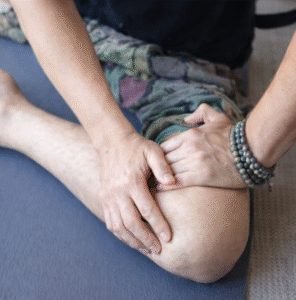
The first thing I would suggest is to use your hands to help draw the flesh of the inner thigh outward, and roll the flesh of the medial (inside) portion of your calf muscle towards your shin. This will create some space in the knee, and relieve some of the tension of your muscles and connective tissue pulling your upper and lower legs together. (Figures 1 & 2)
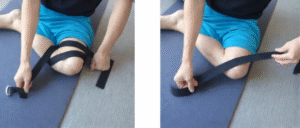
The next thing to try would be to use a strap to create a similar experience. Start by wrapping the strap from the inside of the knee. One end wraps around the thigh (close to but just above the knee), and the other end wraps around the shin (close to but just below the knee).
Bring the ends from underneath and wrap them from the inner knee out, and pull them in opposite directions. It’s a great way to relieve the pressure created in the medial portion of the knee. (Figures 3 & 4)
Another thing to use is a towel. When dealing with a meniscus tear, I’ll often place a towel (or my whole hand) behind someone’s knee to create space for them during flexion. This alone often allows for greater flexion of the knee and less pain. By placing a rolled-up towel behind the knee in the pigeon pose, you get the added benefit of space within the knee. When you bend the knee on the towel and pull it laterally (out and away), it creates the same effect as the strap mentioned above.
You can also use your free hand to help create some space in the calf. (Figures 5, 6, 7, 8)
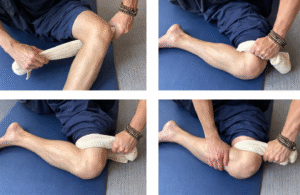
One of these things is usually enough to help eliminate pain in the inner knee in this pose. If there is still pain, it’s probably best to avoid this pose altogether and try something like the thread the needle or the happy baby pose.
Please let me know in the comments section if you have any other helpful tips to resolve inner knee pain in this pose!
Conclusion
Finally, both the expression of not enough external rotation in the hips and too much compression in the knee joint can lead to Knee pain in Pigeon Pose. By learning the mechanics of the pose and making room in the knee with easy modifications—like your hands, a strap or a towel—you can minimize discomfort to make the posture safer and more accessible. Being attuned to your body and keeping the pose modified as necessary is key in preventing injury and encouraging a healthy yoga practice. If you love alignment and anatomy, then a 200 hour yoga teacher training in Rishikesh can help you learn safe posture techniques to ensure proper form.




0 Comments